At
opposite edges of the city, where the urban grid starts to fade, the
banks of the Sangone stream and the Stura di Lanzo river, in Turin,
gradually come into view. During the winter months in particular,
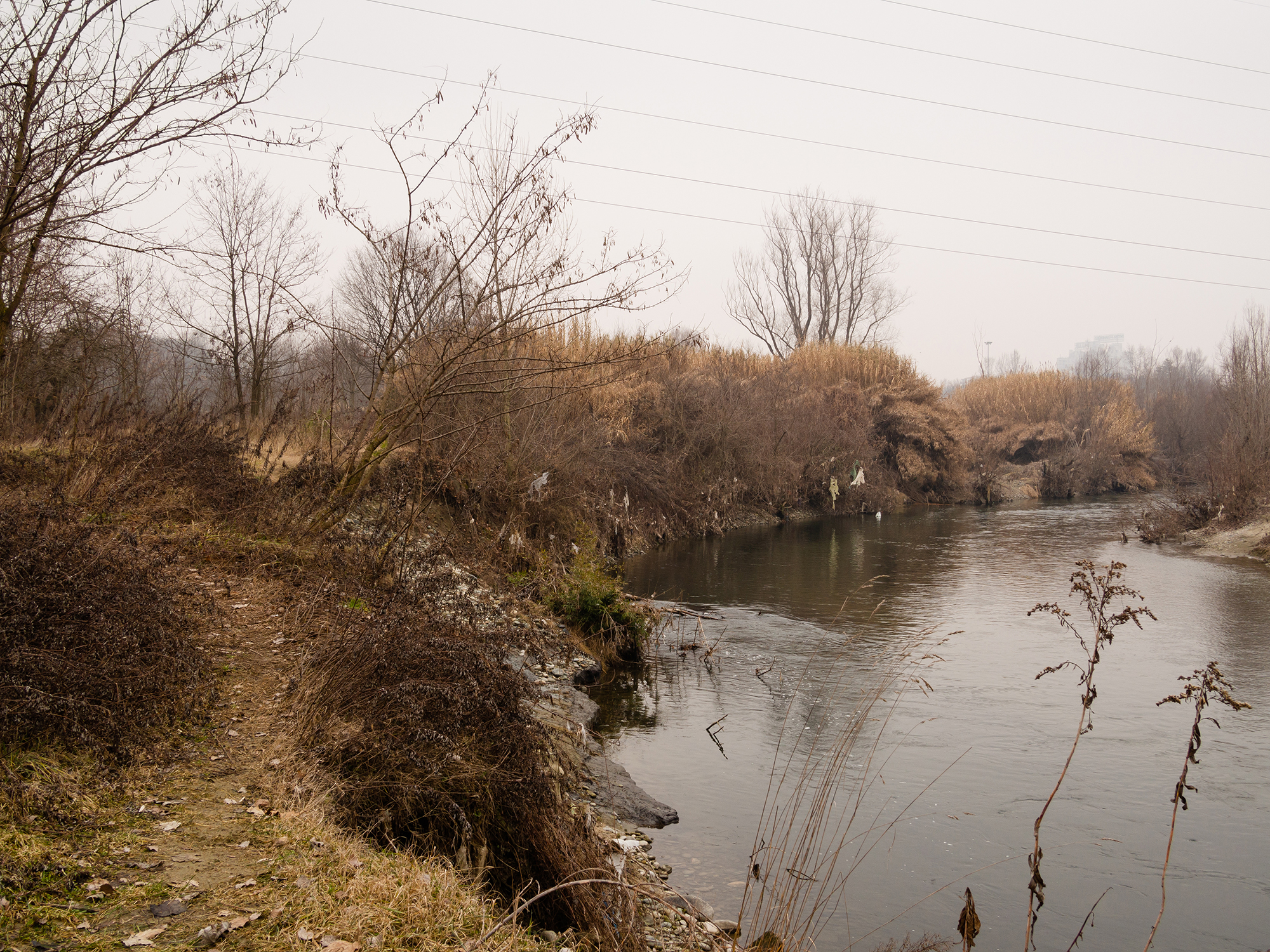
these banks are covered by dense, unmanaged vegetation:
leafless trees, fallen trunks, shallow ponds, and various forms of
detritus carried in by the water combine to produce a semi-natural
landscape.
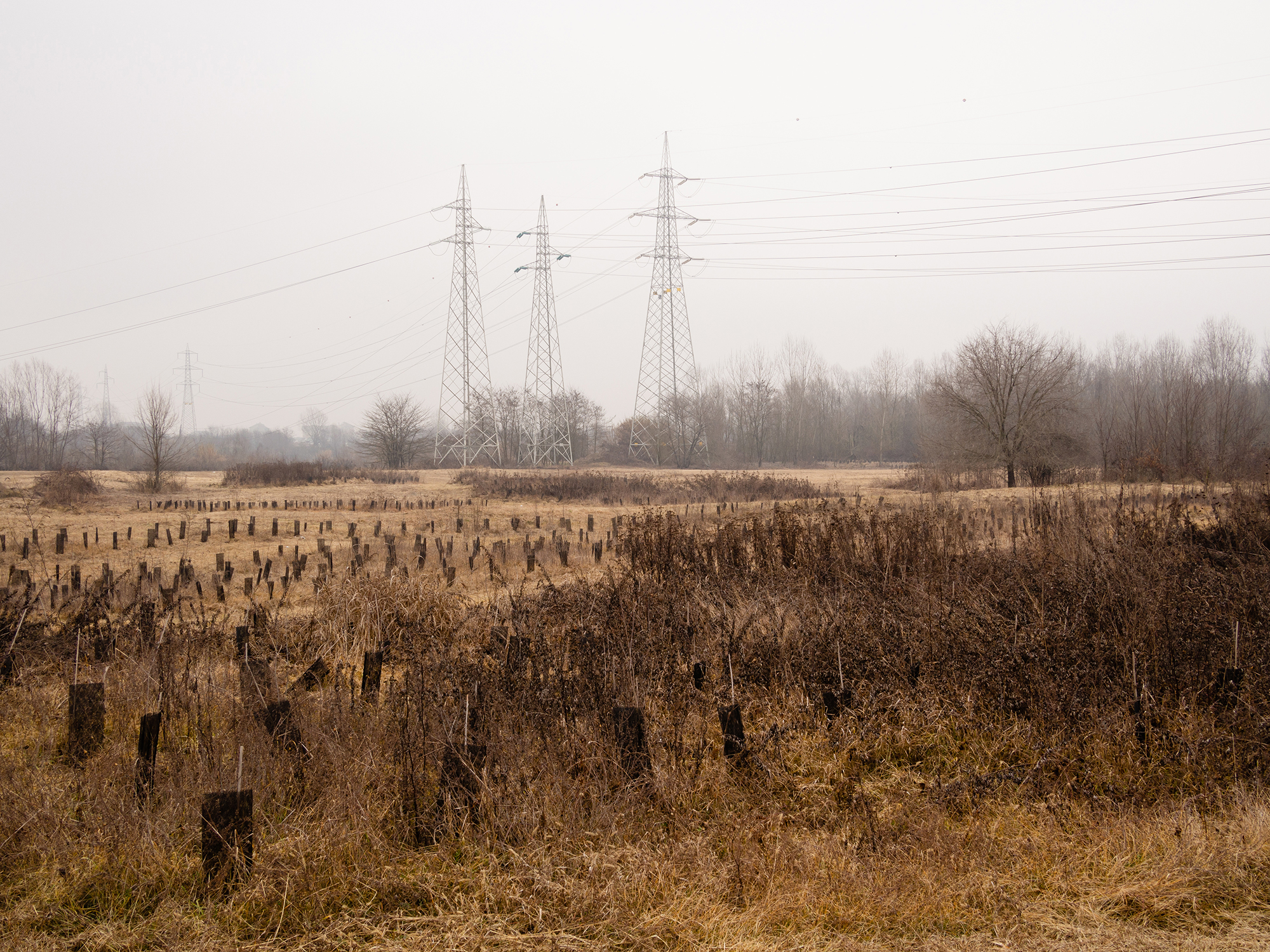
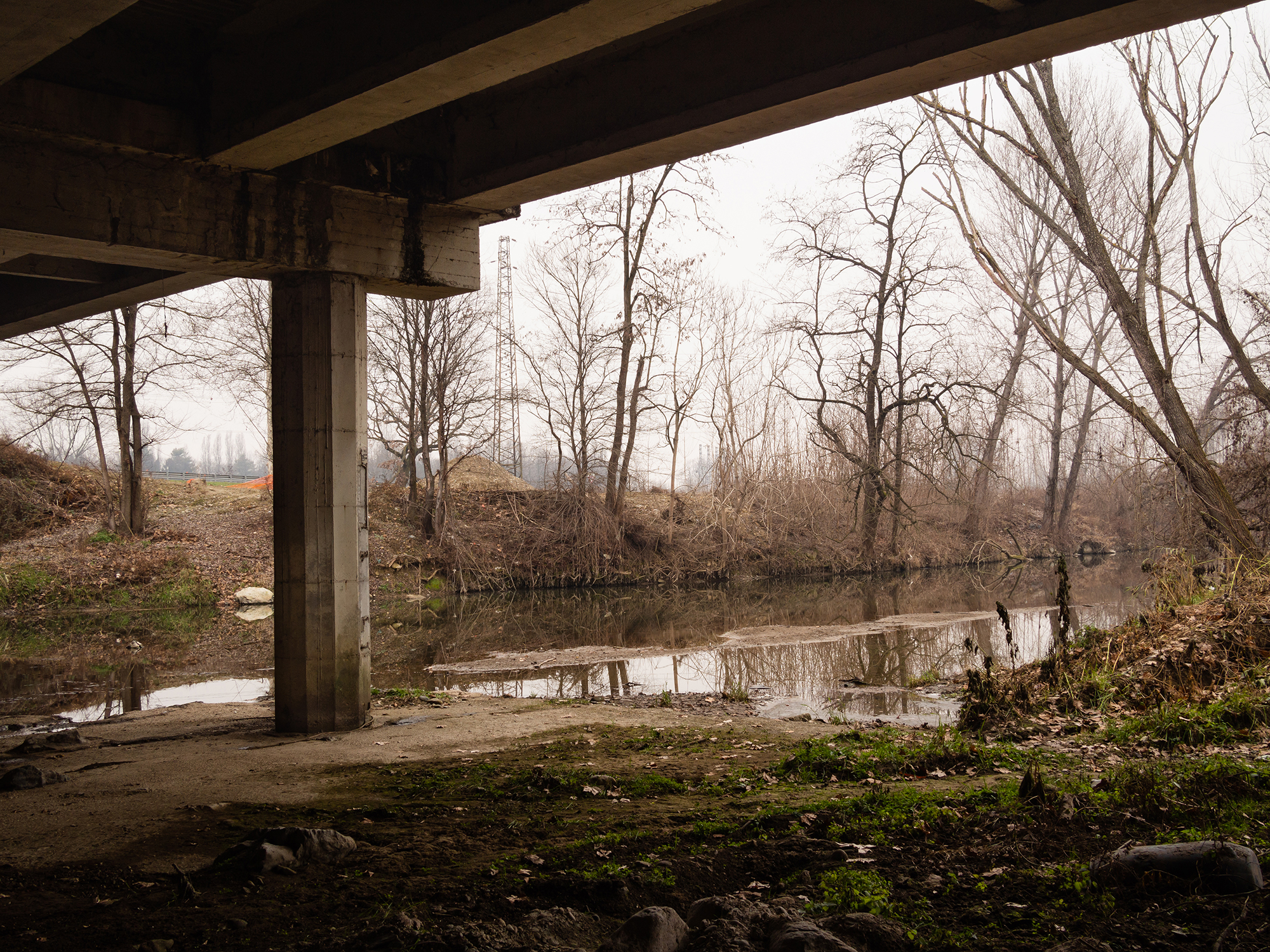
Despite their peripheral location, the urban environment remains audible along the river corridors. Sounds of traffic jam, distant voices, music, and, occasionally, the distant echo of sirens. At ground level, urban infrastructure becomes apparent through the presence of high-voltage poles, with their electric buzz, and bridges that intersect the area without fully defining it. Traces of human activity - including informal paths, urban gardens, waste, and personal belongings - suggest a space shaped by temporary and adaptive practices rather than by fixed functions or clearly defined uses.
Within this context, where spontaneous vegetation and provisional uses of the land coexist without a clearly defined order, the spatial configuration appears to be regulated by a certain autonomy among its parts, adjusting to seasonal, political, and environmental changes.
These spaces, often referred to as urban river parks, seem to resist their own classification. They are neither neglected nor protected or formally designed. Instead, they persist as in-between spaces, interstitial and without symbolic status, grounded in their peripheral condition and shaped by overlapping processes rather than by a defined purpose. Their ecological, spatial, and social character tends toward instability, evolving instead through the flow of continuous transformations, without settling into a single identity.
SPONDE was exhibited at Torino Urban Lab as part of its 2022 Cultural Programme, which focused on the theme Nature in the City.
The project was also selected as one of the winners of the Urbanautica Institute Awards 2022 and featured in the published catalogue.





SPONDE
At opposite edges of the city, where the urban grid starts to fade, the banks of the Sangone stream and the Stura di Lanzo river, in Turin, gradually come into view. During the winter months in particular, these banks are covered by dense, unmanaged vegetation: leafless trees, fallen trunks, shallow ponds, and various forms of detritus carried in by the water combine to produce a semi-natural landscape.
Despite their peripheral location, the urban environment remains audible along the river corridors. Sounds of traffic jam, distant voices, music, and, occasionally, the distant echo of sirens. At ground level, urban infrastructure becomes apparent through the presence of high-voltage poles, with their electric buzz, and bridges that intersect the area without fully defining it. Traces of human activity - including informal paths, urban gardens, waste, and personal belongings - suggest a space shaped by temporary and adaptive practices rather than by fixed functions or clearly defined uses.
Within this context, where spontaneous vegetation and provisional uses of the land coexist without a clearly defined order, the spatial configuration appears to be regulated by a certain autonomy among its parts, adjusting to seasonal, political, and environmental changes.
These spaces, often referred to as urban river parks, seem to resist their own classification. They are neither neglected nor protected or formally designed. Instead, they persist as in-between spaces, interstitial and without symbolic status, grounded in their peripheral condition and shaped by overlapping processes rather than by a defined purpose. Their ecological, spatial, and social character tends toward instability, evolving instead through the flow of continuous transformations, without settling into a single identity.
SPONDE was exhibited at Torino Urban Lab as part of its 2022 Cultural Programme, which focused on the theme Nature in the City.
The project was also selected as one of the winners of the Urbanautica Institute Awards 2022 and featured in the published catalogue.